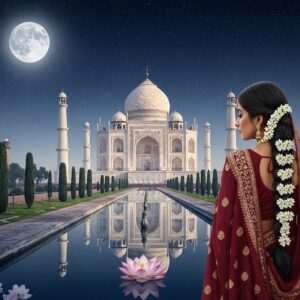


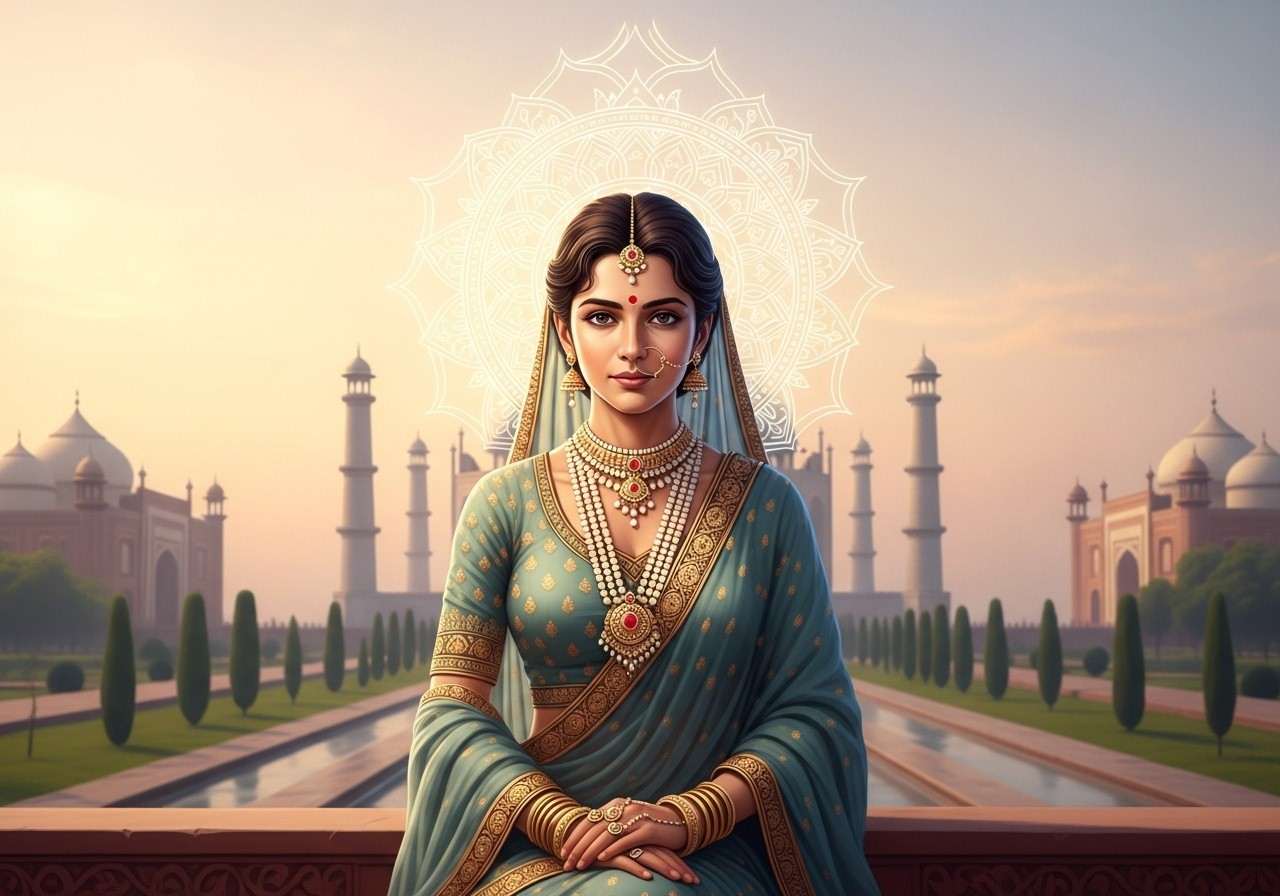
When we think of Indian history, certain names echo through the corridors of time with a grace that is unforgettable. Mumtaz Mahal is one such name. While the world knows her primarily as the inspiration behind the breathtaking Taj Mahal, her story is so much more than just a monument in marble. It is a narrative woven into the very fabric of our cultural heritage—a story of love, devotion, and feminine strength that resonates with every Indian household.
To truly appreciate the grandeur of the Taj, we must first understand the woman who inspired it. At Poojn.in, we believe that connecting with our past enriches our present. Join us as we step back into the 17th century to explore the life of the Empress who defined an era of Mughal elegance.
Arjumand Banu Begum: The Flower of Persian Nobility
Before she became the “Exalted One of the Palace,” she was born as Arjumand Banu Begum on April 27, 1593, in Agra. Coming from a lineage of high Persian nobility, she was destined for greatness. Her father, Abu’l-Hasan Asaf Khan, was a wealthy and powerful noble in the Mughal Empire, and her aunt was none other than the formidable Nur Jahan, the chief consort of Emperor Jahangir. Growing up in such an influential environment, Arjumand was cultivated in the finest arts and etiquette, traits that would later define her reign as Empress.
A Union Written in the Stars
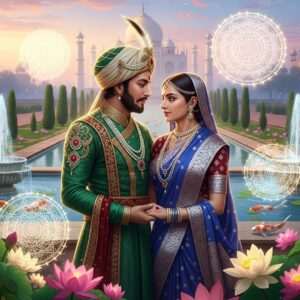
The love story that would captivate the world began when Arjumand was betrothed to Prince Khurram (who would later become Emperor Shah Jahan) in 1607. She was just 14 years old at the time. However, as was the custom, they had to wait for the auspicious moment. They were finally united in marriage on May 10, 1612.
It is said that upon their marriage, Shah Jahan was so mesmerized by her character and appearance that he bestowed upon her the title “Mumtaz Mahal,” meaning “The Exalted One of the Palace.” Although the Emperor had other wives, his bond with Mumtaz was unique. She was his soulmate, his constant companion, and his trusted confidante. Whether in the safety of the palace or the rugged terrains of military campaigns, she remained by his side, embodying the ideal of a devoted partner.
Her Role, Compassion, and Tragic Departure
Mumtaz Mahal was not merely a figurehead; she was a woman of substance. Known for her kindness and compassion, she took a keen interest in the welfare of the people. She actively supported widows, orphans, and the destitute, earning the profound respect of both the imperial household and the common subjects. Her patronage extended to poets, musicians, and artisans, enriching the cultural tapestry of the Mughal court.
Tragically, this beautiful journey was cut short. On June 17, 1631, in Burhanpur, Mumtaz Mahal breathed her last while giving birth to their 14th child. Her untimely death left Shah Jahan devastated. It was this immense grief and undying love that drove him to commission the Taj Mahal as her final resting place—a symbol of eternal love that stands today as a UNESCO World Heritage Site.
Bringing Royal Elegance to Your Home
The era of Mumtaz Mahal was defined by an appreciation for beauty, fragrance, and spiritual ambiance. While we cannot recreate the Mughal courts, we can certainly invite that sense of serenity and tradition into our modern homes.
At Poojn.in, India’s leading store for cultural goods, we offer a curated collection that helps you stay connected to these roots. Imagine lighting a traditional diya or using premium incense that fills your home with a fragrance reminiscent of royal gardens. Our authentic ritual items are perfect for those who value heritage and want to create a peaceful, culturally rich atmosphere at home.
Please note: While we love sharing the stories of India’s heritage, Poojn.in is exclusively an online store for cultural products. We do not provide travel packages, guide services, or VIP darshan bookings for monuments or temples.
Understanding the Legend: Common Questions
Many of us have questions about the details of her life. Let’s clarify some common queries regarding this historical icon.
The Real Name Behind the Title
Many people ask what her birth name was. Before she was the Empress, she was known as Arjumand Banu Begum.
The Span of Her Life
She was born in 1593 and left this world in 1631. Though her life was short, her impact was everlasting.
Her Family Life
As the beloved wife of Emperor Shah Jahan, she was a devoted mother who bore 14 children. It was during the birth of the last child that she passed away.
Why She Remains Famous
Beyond being an Empress, she is the eternal inspiration behind the Taj Mahal. Her legacy is one of compassion, intelligence, and a love so powerful it inspired one of the wonders of the world.
Conclusion: A Legacy That Lives On
Mumtaz Mahal’s story is a poignant reminder of the power of love and the importance of preserving our history. She was more than a queen; she was a symbol of grace, charity, and unwavering devotion. Today, as we navigate our modern lives, remembering such figures helps us stay grounded in the values that define Indian culture.
Let her story inspire you to fill your own life with grace and devotion. And for all your traditional needs to keep your home’s cultural spirit alive, remember to visit Poojn.in—your trusted partner in celebrating India’s rich heritage.