
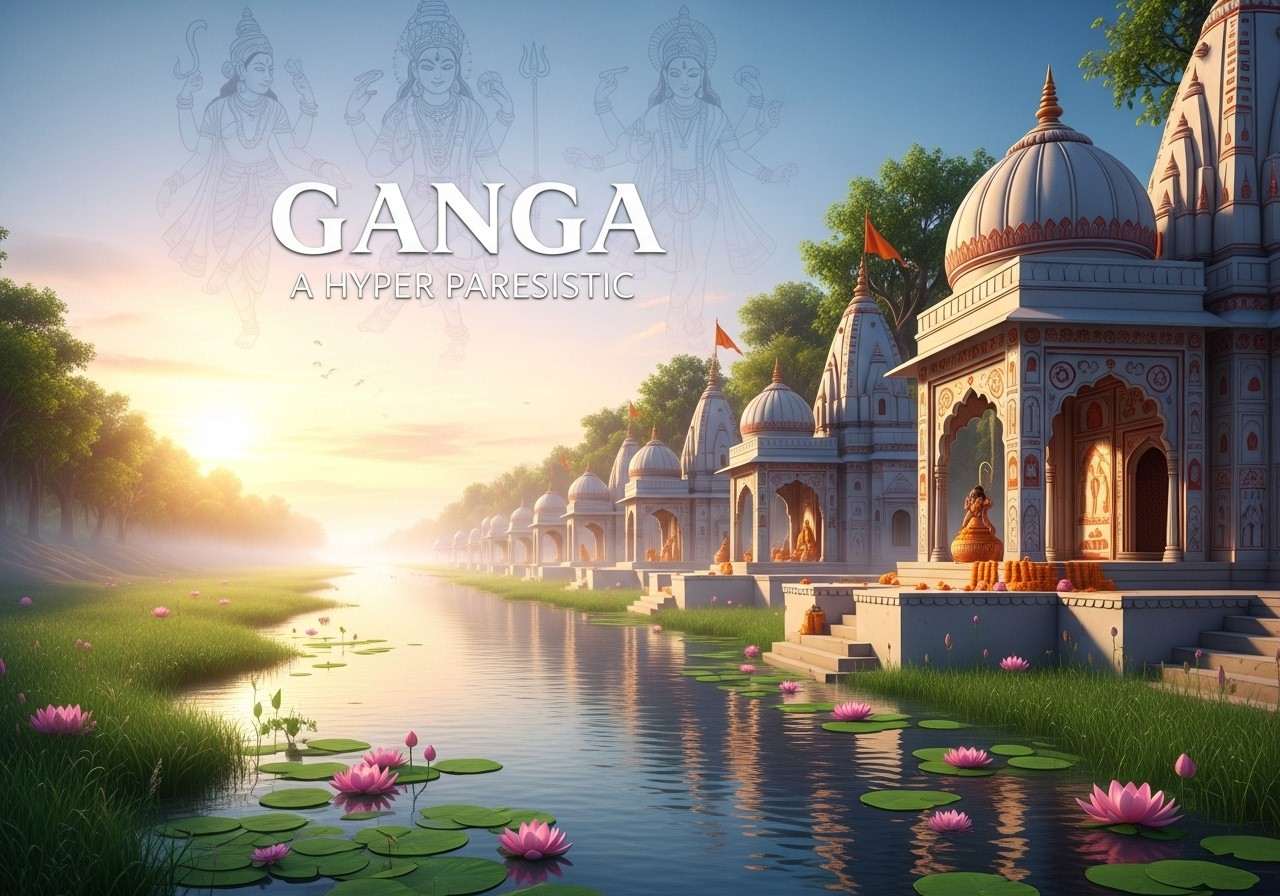
In the soul of every Indian, the River Ganga is much more than a body of water. She is a living, breathing goddess, a mother who washes away the burdens of life and nurtures the spirit. Known affectionately as Maa Ganga, she flows through the heart of our nation, witnessing our prayers, our joys, and our final journeys. From the majestic Himalayas to the Bay of Bengal, her waters carry stories of faith that have been told for thousands of years. But did you know that this sacred river carries many names, each unlocking a different secret of her divine origin?
Just as a mother is known by different names to her children, parents, and friends, the Ganga bears titles like Bhagirathi, Jahnavi, and Tripathaga. These are not just labels; they are echoes of ancient legends, stories of penance, anger, grace, and liberation. For us at Poojn.in, understanding these names is a way to deepen our connection with the divine, bringing us closer to the traditions that define who we are.
The Sacred Origins: Bhagirathi and Alaknanda
One of the most profound names for the river is Bhagirathi. This name takes us back to the icy heights of the Gaumukh glacier at Gangotri. It is a tribute to King Bhagiratha, a figure of immense determination in our mythology. Legend tells us that King Bhagiratha performed severe penance for years to bring the celestial river down from the heavens to purify the souls of his ancestors. When you hear the name Bhagirathi, remember that it symbolizes the power of faith and perseverance—a reminder that pure devotion can move both heaven and earth.
Before she becomes the Ganga we see in the plains, she is also known as Alaknanda. Considered the hydrological source stream, the Alaknanda rushes down with a fierce beauty. It is only when the calm Bhagirathi meets the turbulent Alaknanda at Devprayag that the river officially takes the name Ganga. This union teaches us about balance—how different energies come together to create something life-sustaining and holy.
Stories of Gods and Sages: Jahnavi and Jatashankari
The stories of the Ganga are deeply intertwined with the gods and sages of India. Have you ever heard her called Jahnavi? This name comes from a fascinating encounter with Sage Jahnu. As the river descended with great force, her waters flooded the sage’s ashram, disturbing his meditation. In a fit of anger, the sage swallowed the entire river! It was only after King Bhagiratha pleaded with him that Sage Jahnu released her through his ear. Thus, she became the daughter of Jahnu, or Jahnavi, teaching us lessons about humility and forgiveness.
Another powerful name is Jatashankari. This title paints a vivid image of Lord Shiva. When the Ganga descended from heaven, her force was so mighty that it threatened to shatter the earth. To protect the world, Lord Shiva caught her in his matted locks (Jata), calming her flow before releasing her gently. This name reminds devotees of the protective nature of the divine, showing how Lord Shiva’s grace makes the intense energy of the Ganga accessible to us mortals.
Traveling Through Worlds: Tripathaga and Vishnupadi
The spiritual reach of the Ganga extends far beyond the physical world. She is often called Tripathaga, meaning “The One Who Travels Three Paths.” This signifies her flow through Heaven (Swarga), Earth (Martya), and the Netherworld (Patala). It reinforces the belief that the Ganga is the ultimate liberator, offering Moksha (salvation) to souls in all realms of existence. Whether we are praying for the living or the departed, Tripathaga connects us to all planes of life.
Similarly, the name Vishnupadi highlights her pure origin. It is believed that the river was born from the lotus feet of Lord Vishnu. For Vaishnavites, this makes the water not just a purifier but a direct contact with the preserver of the universe, carrying his blessings in every drop.
Beyond Borders: The Name Padma
As the river flows eastward, crossing the boundaries of India, she adopts a new identity. In Bangladesh, the Ganga is revered as Padma. This change happens after the river bifurcates at the Farakka Barrage. The name Padma is not just a geographical marker; it represents the river’s role as a lifeline for agriculture and culture in the region. It is a beautiful reminder that the grace of Mother Ganga knows no man-made borders; she nourishes all lands she touches, acting as a bridge of cultural connection between nations.
Bringing the Essence of Ganga Home
We understand that not everyone can travel to the banks of the Ganges or to the heights of Gangotri to offer their prayers. However, the need to connect with Maa Ganga is always present in our hearts. At Poojn.in, we bridge this gap by bringing authentic spiritual items to your doorstep, ensuring your rituals remain pure and traditional.
- Pure Gangajal: We provide bottled Gangajal sourced with care, perfect for your daily Abhishekam or purification rituals. Having this sacred water at home ensures that the blessings of Bhagirathi are always within your reach.
- Complete Puja Kits: Our curated puja kits contain everything you need for a traditional worship ceremony, from incense to diyas. These kits are designed to help you focus on your devotion to deities like Jatashankari without worrying about missing items.
- Idols and Statues: Adorn your home temple with beautifully crafted idols of Goddess Ganga and other deities. These idols serve as a physical reminder of the divine stories we cherish, helping you maintain a spiritual atmosphere at home.
We pride ourselves on offering only authentic cultural goods. Please note that we do not organize travel packages or offer VIP darshan services. Our sole mission is to support your spiritual journey through high-quality products available at our online store. You can explore our full collection at www.poojn.in.
Frequently Asked Questions About Ganga’s Names
Understanding the Name Bhagirathi
Many devotees ask why the river is specifically called Bhagirathi. This name is directly linked to King Bhagiratha’s extraordinary penance. He is the one who succeeded in bringing the celestial river down to earth to liberate his ancestors. Therefore, in her upper reaches and in the context of her origin story, she is honored as the daughter of Bhagiratha.
The Transition to Padma
People often wonder why the name changes to Padma in Bangladesh. This shift occurs geographically at the point where the river enters Bangladesh. The name Padma is traditional to that region and signifies the river’s local importance, distinguishing the main distributary that flows towards the Bay of Bengal from the stream that remains in India.
The Story Behind Jahnavi
Curiosity often surrounds the name Jahnavi. This title is derived from Sage Jahnu. Since he swallowed the river to punish her for flooding his ashram and later released her, the river is poetically considered his daughter. It serves as a reminder of the dynamic relationship between nature’s force and the spiritual power of India’s sages.
Why She is Called Tripathaga
The term Tripathaga fascinates many because it describes the river’s cosmic journey. It refers to her flowing through three worlds: Heaven, Earth, and the Underworld. This reinforces the Hindu belief that the Ganga has the power to grant liberation to souls across all realms of existence.
Embracing the Flow of Faith
Whether you call her Ganga, Jahnavi, or Vishnupadi, the essence remains the same—she is a source of purity, life, and salvation. These names are not just words; they are the threads of our culture woven into stories that have guided generations. By understanding them, we keep our heritage alive.
At Poojn.in, we are honored to be a small part of your devotional life. We invite you to continue your traditions with pride and authenticity. For any assistance with your cultural needs, feel free to visit our website.