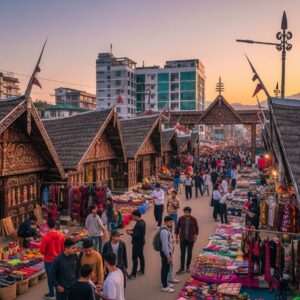

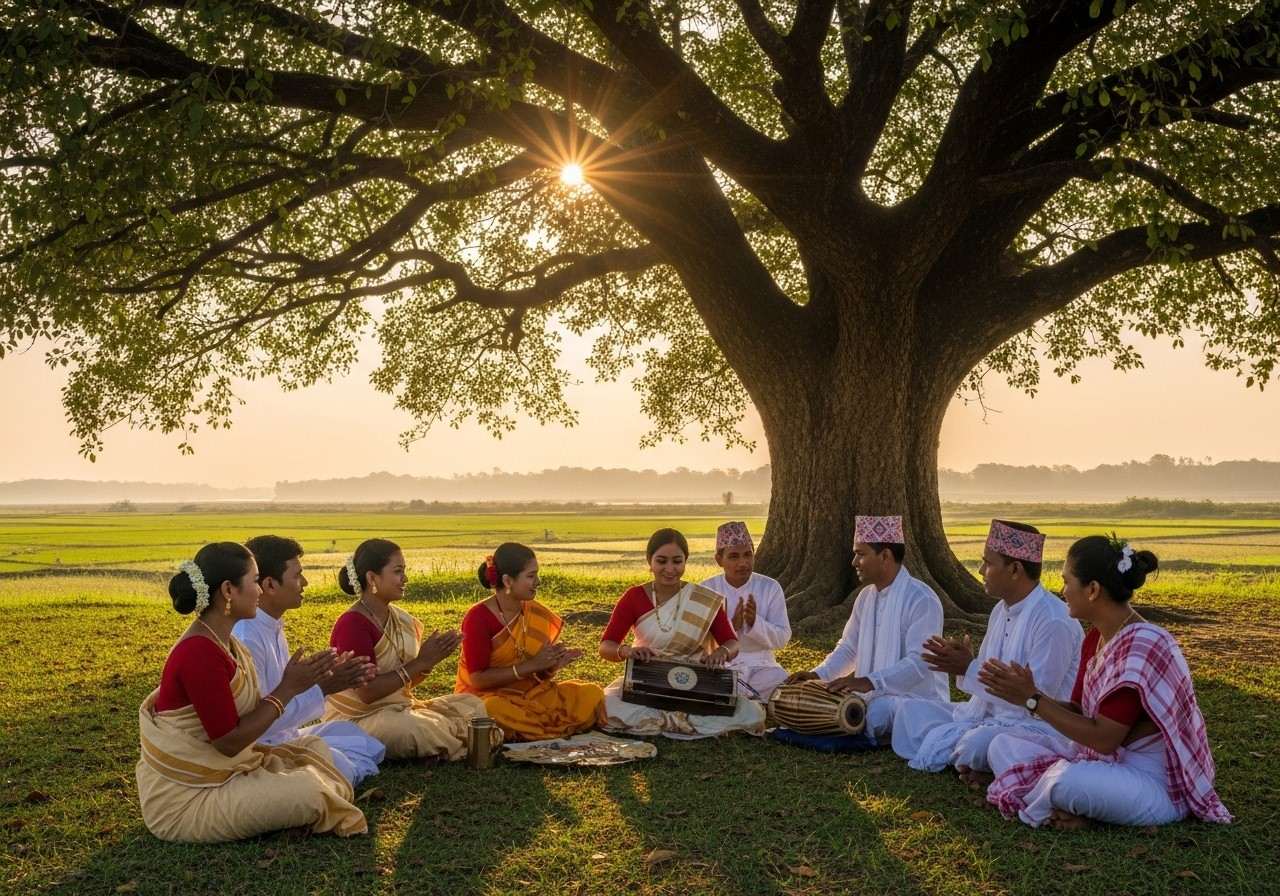
Assam, the land of the Red River and Blue Hills, is home to a culture that is as vibrant as its lush tea gardens. Among its many treasures, Kamrupi Lokgeet stands out as a timeless form of folk music that captures the very essence of the region’s heritage. For us Indians, music is not just entertainment; it is a way to connect with our roots, our ancestors, and the divine. This cherished genre from the Kamrup region serves as a beautiful vessel, carrying stories, wisdom, and emotions from the past into our modern lives.
At poojn.in, we deeply respect these traditions. We understand that preserving our cultural identity requires keeping these melodies alive, not just in our memories but in our homes and celebrations.
Tracing the Roots: A Historical Perspective
The origins of Kamrupi Lokgeet are deeply embedded in the soil of the Kamrup region of Assam. It didn’t just appear overnight; rather, it evolved over centuries, shaped by the ebb and flow of cultural exchanges and socio-political changes in ancient Kamrup. Historically, this music reflected the everyday lives of the people—their joys, their struggles, and their devotion.
From traditional ceremonies to harvest festivals, these songs were the constant companions of our forefathers. Local communities have worked tirelessly, generation after generation, to preserve this cultural heritage. It is a testament to the resilience of the Assamese people that these songs continue to resonate today, bridging the gap between history and the present day.
The Legends and Their Masterpieces
When we talk about Kamrupi Lokgeet, we cannot forget the voices that gave it wings. The genre has been graced by legendary singers who poured their souls into every note. Renowned artists like Rameshwar Pathak and Dhanada Pathak are household names, revered for their contribution to popularizing these folk songs.
Other stalwarts include the Late Girikanta Mohanto, Bangshidhar Das, Bhabani Das, and Sujala Baishya, whose renditions have left an indelible mark on Assamese culture. Their voices brought life to iconic songs such as “Ram Gosai”, “Gokul Chalre”, and the devotional “Gobinda Chintahu”.
For those looking to dive deeper into the discography, there are specific albums that serve as historical archives of this art form:
-
Kamrupi Lokgeet By Various Artists (1986)
Released decades ago, this album consists of three iconic songs that defined the era. It features the masterful compositions of the Late Girikanta Mohanto, capturing the raw and authentic sound of the time. -
Kanthahar – Kamrupi Asamees Folk Songs – Lokgeet-Vol. 1 (1994)
Released on January 1, 1994, this significant collection contains eight distinct tracks. It includes the beloved song “Madhur Madhur Ki Madhur”, offering listeners a rich tapestry of lyrical beauty and melodic depth.
Musical Characteristics and Instruments
What makes Kamrupi Lokgeet truly unique is its distinct soundscape. It is not just about the voice; it is about the harmony between the singer and the traditional instruments. The melody and rhythm are often driven by the dhol (drum), taal (cymbals), and the mesmerizing pepa (hornpipe). The vocal techniques used are intricate, designed to bring out the emotional depth of the lyrics, which often revolve around themes of nature, love, and social folklore.
If you wish to bring this authentic sound into your own home, having the right cultural items is essential. We at poojn.in take pride in offering genuine cultural goods that help you stay connected to your traditions.
Bring the Tradition Home with Poojn
To truly appreciate the spirit of Assamese folk music, one often needs the tangible symbols of the culture. Whether you are a collector, a musician, or someone who simply values Indian heritage, owning authentic traditional items can enhance your connection to the art form. At poojn.in, India’s biggest cultural goods store, we offer a curated selection of products for your cultural needs.
Our collection is perfect for those who want to immerse themselves in the vibe of Kamrupi Lokgeet:
-
Traditional Dhols
The dhol is the heartbeat of Assamese music, providing the rhythmic pulse for every celebration. Our dhols are crafted to produce that authentic, resounding beat that brings any folk song to life. -
Authentic Pepa
Made from buffalo horn, the pepa is an iconic instrument with a hauntingly beautiful sound. It is a must-have for any enthusiast wanting to preserve the traditional soundscape of Assam. -
Gogona
This bamboo jaw harp is small but produces a distinct vibrant twang essential to the genre. It represents the simplicity and ingenuity of Assamese folk craftsmanship.
You can explore these and other unique cultural goods at our online store. Visit poojn.in today to find the perfect item that resonates with your spirit. Please note, we strictly focus on providing high-quality cultural goods and do not offer travel packages or VIP temple darshan services.
Understanding Kamrupi Lokgeet: Common Queries
For those new to this genre, there is often a lot of curiosity surrounding its nature and significance. One of the most common things people want to know is what exactly defines Kamrupi Lokgeet. Essentially, it is a form of folk music native to the Kamrup district, distinguished by its specific dialect, melodic structure, and the use of indigenous instruments that reflect the region’s soul.
Another frequent topic of interest is the cultural importance of this art form. It is not merely music; it is a guardian of history. It acts as a vehicle for storytelling, preserving myths, historical narratives, and the social values of the Assamese community, ensuring they are passed down to future generations.
Listeners also often ask where they can find these songs. Thanks to the digital age, many of these classic tracks, including those by Rameshwar Pathak, are available on various music streaming platforms. However, nothing beats the experience of listening to them during a live traditional festival in Assam.
Lastly, people often wonder about the themes covered in the lyrics. The songs are incredibly diverse, touching upon everything from the divine love of Radha and Krishna to the simple, rustic beauty of village life, nature, and the everyday struggles and joys of the common man.
A Legacy for the Future
Kamrupi Lokgeet is experiencing a modern revival. Artists are adapting these timeless melodies for younger audiences, fusing them with contemporary sounds while respecting the original sanctity of the genre. This evolution ensures that the music remains relevant in a changing world.
By listening to these songs and supporting the culture—perhaps by owning a piece of it from poojn.in—you are playing a part in keeping this beautiful tradition alive. Let us celebrate the rich tapestry of Indian culture together, honoring the melodies that have echoed through the hills of Assam for centuries.